Your child has a question about their body, puberty, development, privacy, or how bodies work.
You do not need a perfect explanation. Start with the question your child is actually asking.
Curiosity, development, and body changes are not problems to solve. They are opportunities for calm, accurate conversation.
Choose the situation that fits best.
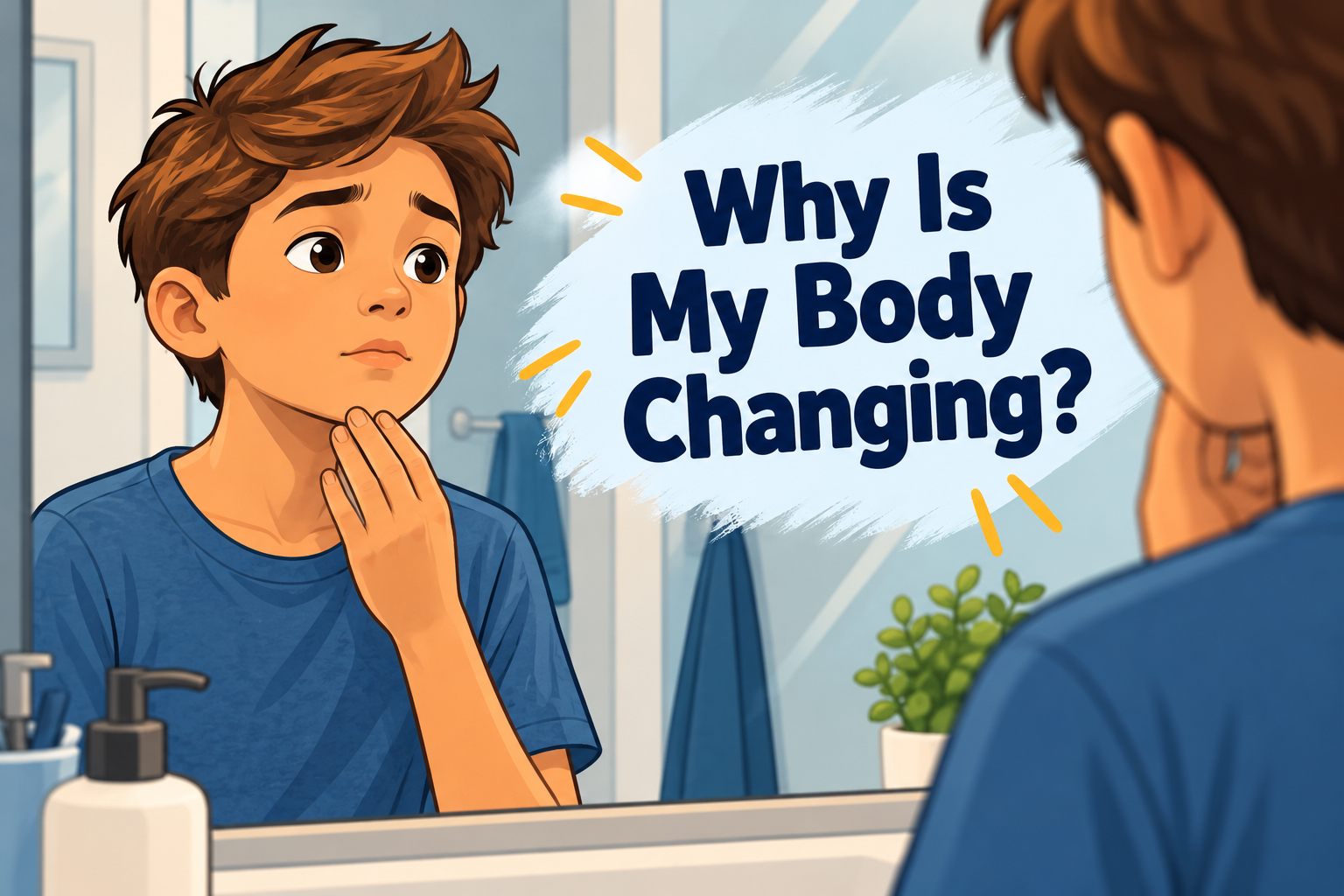
Your child noticed a change related to growth or puberty.
Your child wants to know what a body part is called, where it is, or what it does.
Your child has questions about periods, erections, wet dreams, breasts, body hair, voice changes, odor, or other puberty changes.
Your child is asking about reproduction, pregnancy, or how a baby begins and grows.
Your child is comparing their body with other people or is worried about the timing or appearance of development.
Your child wants more privacy when dressing, bathing, using the bathroom, or being in their room.
Pause ✶ — Something caught your attention. Notice it. Do nothing yet.
“What’s happening here?”
Younger child: “For our family, is this okay?”
Older adolescent: “For me, is this okay?”
Younger child: “Why does this matter to our family?”
Older adolescent: “Why does this matter to me?”
Younger child: “What’s our next step?”
Older adolescent: “What’s my next step?”
Answer the question simply and concretely. Use correct body-part names without adding more detail than the child needs.
Try saying: “That’s a good question. I’ll tell you what that part is called and what it does.”
Give accurate information while inviting the teen’s own questions, judgment, and responsibility for caring for their body.
Ask: “What have you noticed?” “What have you heard?” “What would you like to understand better?”
Faith and family values can help children understand dignity, stewardship, modesty, sexuality, and respect for the body without making normal development shameful.
Pain, injury, unexplained bleeding, concerning discharge, a sudden or unusual change, suspected abuse, or another health or safety concern may need professional attention rather than only a family conversation.
Tell Granny what your child asked, how old your child is, and what would be useful for your family right now.
Granny can help you understand the question, find age-appropriate words to use, choose a TALK Tool, or identify the next useful resource.