Your child has a question or experience involving personal boundaries, consent, touch, or respect.
You do not need to panic or give a long speech. Start by understanding what happened and what your child is trying to ask or tell you.
Boundaries and consent can be taught calmly, clearly, and early. Children can learn that their body matters, other people’s bodies matter, and respect applies both ways.
Choose the situation that fits best.
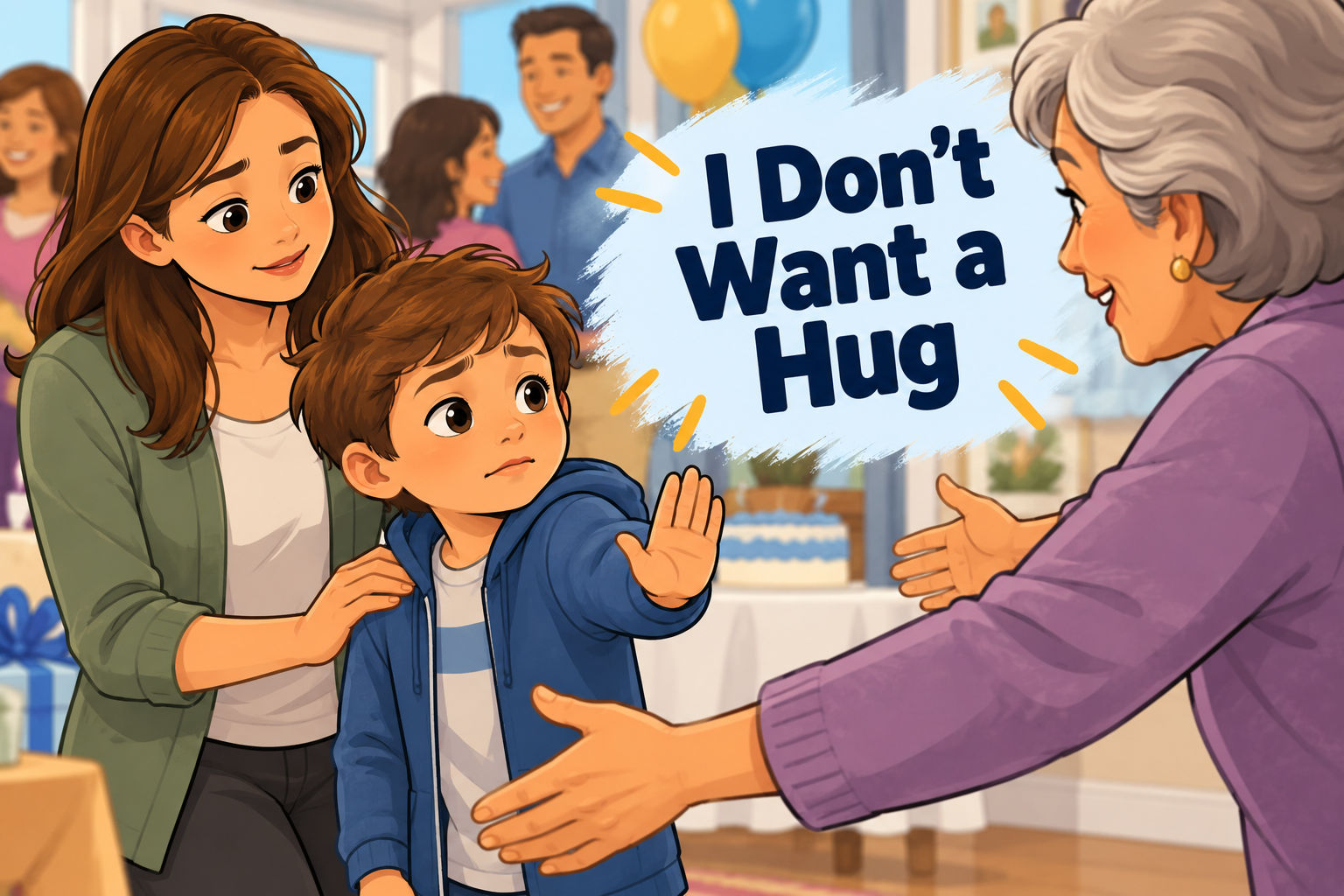
Your child is expressing a boundary about affection or touch.
Your child is describing touch that may have started playfully but no longer feels okay.
Your child is describing unwanted touch or a possible boundary violation.
Your child wants to understand how choice, affection, and respect work in your family.
Your child is asking about permission, willingness, and mutual respect.
Your child is learning how to notice and respond to another person’s comfort level.
Pause ✶ — Something caught your attention. Notice it. Do nothing yet.
“What’s happening here?”
Younger child: “For our family, is this okay?”
Older adolescent: “For me, is this okay?”
Younger child: “Why does this matter to our family?”
Older adolescent: “Why does this matter to me?”
Younger child: “What’s our next step?”
Older adolescent: “What’s my next step?”
Keep it simple and concrete. Teach that they can say no to unwanted touch, listen when someone else says no, and tell a trusted adult when something does not feel right.
Try saying: “Your body matters. If you don’t want a touch, you can say no or stop.”
Talk more directly about consent, pressure, mutual respect, physical boundaries, and responsibility.
Ask: “How do you know if the other person is comfortable?” “What does respect look like here?” “What should you do if someone says no or seems unsure?”
You can connect boundaries, consent, and respect with your family’s beliefs about dignity, agency, stewardship of the body, and how we treat other people.
Repeated violations, sexual touching, coercion, secrecy, threats, grooming, abuse, or immediate danger require more than an ordinary family conversation.
Tell Granny what your child asked, said, or experienced, how old your child is, and what would be useful for your family right now.
Granny can help you understand the situation, find words to use, connect the conversation with your family’s values and faith, choose a TALK Tool, or identify the next useful resource.